

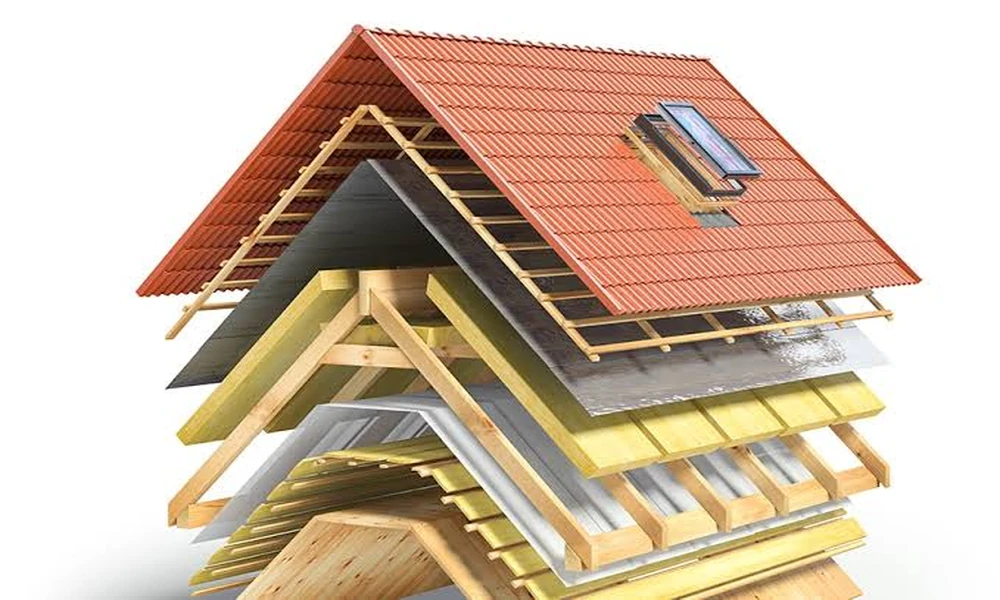
From the street, a new roof is just shingles. Underneath them sit five or six other layers, and most leaks start where one of those was skipped or rushed. The estimate for a replacement usually lists each part by name. Owners who go to website product pages for those items can see what each one looks like before the crew shows up.
Down to the Wood
A full replacement starts with tear off. The old shingles and underlayment come off in strips, straight into a dumpster or trailer, until only the wooden deck is left.
That deck gets walked and checked. Plywood, or OSB, a board made from pressed wood chips, that has gone soft gets cut out and replaced. The soft spots are usually near the eaves or around a chimney. Loose boards get renailed. A few sheets is normal on an older house. Contracts often price extra sheets per piece, since nobody knows the count until the old roof is off.
Metal at the Edges
Drip edge goes on next. It’s a bent strip of metal along the eaves and along the sloped sides, called rakes. Its job is to steer water away from the wooden edge and into the gutter.
The Water Barriers
Two kinds of underlayment cover the deck.
- Ice and water membrane. Sticky on the back, it bonds to the wood and seals around nails. It goes along the eaves, in valleys, and around chimneys and vent pipes.
- Synthetic underlayment. A lighter woven sheet that covers the rest of the deck. It replaced old felt paper on most jobs because it tears less and lies flatter.
These layers are the backup. If wind lifts a shingle, they keep the rain out until a repair.
Starter Strip and Shingles
A starter row runs along the eaves and rakes first. It has a strip of sealant along the edge, so the first row of shingles glues down tight. Edges are where wind gets hold of a roof, and that strip is the defence.
Field shingles follow, row by row from the bottom up. Nailing matters more than most owners realise. Each shingle has a marked nailing zone, and nails placed too high or too low lose most of their holding power. Shingle brands publish installation diagrams, and anyone curious about the exact pattern can go to website instruction sheets from the manufacturer. Four nails per shingle is common. High wind areas often call for six.
Venting the Top
Some manufacturers offer longer warranties when the underlayment, starter strip, shingles and ridge caps all come from the same brand and are sold as one system.
